
Videos
Reviews:
-
Watch this review on YouTube
While its insistence on using somewhat vague pastels muddies what could sometimes have been more straightforward puzzle solving, this unique adventure still has charm
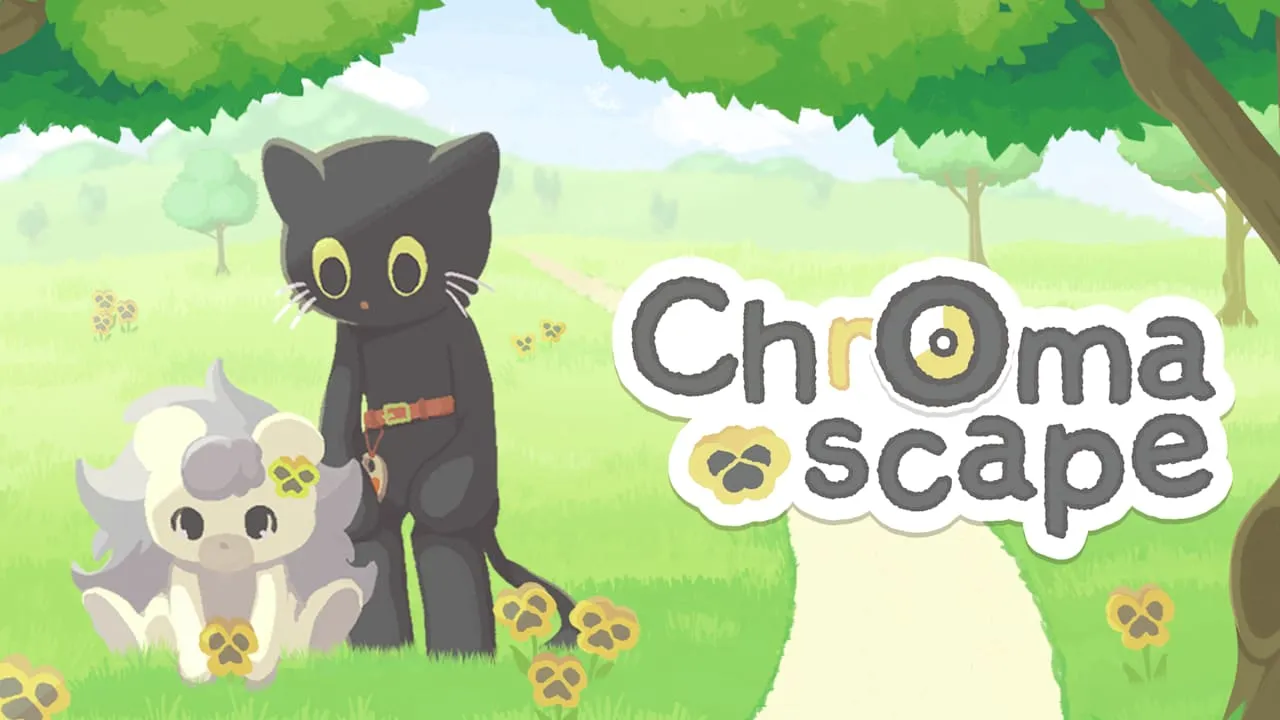
As I always have said, games that take chances and do things in new and different ways are always appreciated, and will tend to get some small degree of favor from me in general. My thinking is that without developers out there coming up with new ideas and variations on known gameplay, the industry will likely begin to suffer and potentially shrink. While I’m not inclined to completely overlook glaring issues, I have found that on the whole I do tend to at least be a little forgiving for teams who’ve taken some big swings, and perhaps just don’t connect as well as they could have.I find that’s the case for Chromascape, an adventure where most of the puzzle-solving will require you to absorb, sometimes combine, and then use colors in creative ways on different elements around you. It turns out that your town, and even those surrounding you, are in trouble. The color has been draining out of everything, and aside from that making the world less vibrant, people have also been disappearing entirely, so someone will need to take action. Fortunately, you play the part of Luna, a hedgehog who is determined to set out to figure out the cause of this scourge, getting whatever help she can along the way to try to bring the colors back. As you may have guessed, the bulk of what you’ll be doing is solving different puzzles by ensuring things get the proper colors. This is often as simple as grabbing the color directly from some other object in the area, but as you progress you’ll also find that at times you’ll need to blend colors together, or need to put a little more thought into things like what colors compliment each other in order to find your solution.While all of this works well enough on a general level, and it makes for a pretty pleasant experience on the whole, there are some problems. The main issue I bumped into a few times was with the choice to use milder pastel-style colors instead of more primary ones. While at some point you’ll simply come to understand what shade the game considers to be “blue” or “red”, there’s absolutely some room for confusion when you’re simply grabbing colors from the environment and they happen to visually look like they could be considered that color. In particular, I initially would confuse purple for blue and red for pink, and while that’s something you can simply adapt to it also feels like an unforced error. Another pity is that though this is a very mild adventure, without having a parent playing along with them to explain some things I’m not sure it would be as friendly for kids as it may appear to be at a glance. Between the color confusion, some mechanical shortcomings with the controls, and quite a lot of text used at times to explain concepts like complimentary colors, which you must understand to progress, there’s a bit of room for younger gamers to get frustrated here. On the whole it remains a nice cozy adventure, I just wish that in execution some things worked a bit more cleanly and clearly.
Justin Nation, Score:Good [7.5]