
Videos
Reviews:
-
Watch this review on YouTube
Much like the original, this more morbid take on a life sim has its quirks, and can feel grindy, but stays entertaining with its unique approach and sense of humor
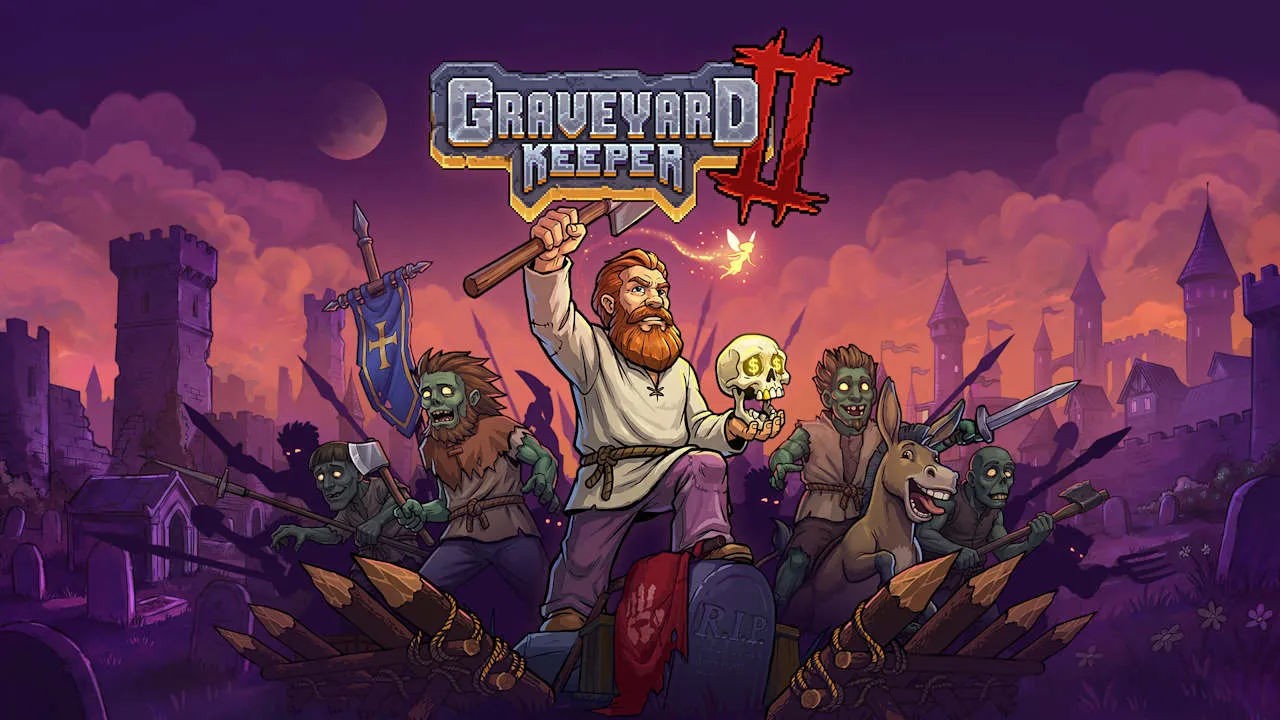
While I’m a huge fan of Stardew Valley, and have enjoyed quite a lot of the games that have been released since that have effectively been variations on its formula, I’ll admit that it’s nice to see more daring attempts to break that mold and do something different. With its far more morbid activities and sharp sense of humor, the original Graveyard Keeper did precisely that, and while it had some flaws it was still refreshing fun for the most part. Now, with the release of the sequel, we’re at least seeing a more refined version of that same core gameplay, tightened up and improved to hopefully be appealing to a wider audience this time around.If you’re unfamiliar with the original, the basic idea here is to take a farming-oriented life sim, drop it into sometime in the middle ages, and then delve into the cultivation of some far darker materials. Put in charge of the local graveyard, on the surface you’ll be responsible for preparing corpses for burial and maintaining the grounds. Of course, given the demand for certain materials such as blood, skin, and organs, it would seemingly be a shame to let them go to waste, so why not cultivate things like that as well in order to supplement your profits? Consistent with the original game’s DLC you’re even able to go a step further, turning mere dead bodies into reliable zombie workers, helping you offload some tasks and increase productivity. In this sequel, those will also be vital to efforts to retake the city that has been taken over, giving the overall game a bit more dimension and an element that feels refreshingly different in the midst of more generally familiar activities.All that said, there are still some aspects of play that may alienate some players outside of its overall more morbid tone. While this iteration of the series does a better job of trying to introduce you to different aspects and screens tied to your progression, there’s still quite a bit to navigate and to grasp onto, and not everything is explained very well. The buttons that drive the interface and all of those screens also aren’t quite as intuitive as I’d prefer, and I’ve absolutely struggled less with some competitors in that specific area of concern. While this genre can tend to feel grindy as you spend multiple days sometimes feeling like you’re making only minimal progress, the different elements you’ll need to upgrade and unlock certain skills here can add to that problem, especially early on as you’re trying to get up to speed with it all. With some patience this can be a fun take on the familiar, for sure, but it’s also not going to be for everyone for a variety of reasons.
Justin Nation, Score:Good [7.8]